Posts Tagged board-games
A Sense of Community
Posted by thunsicker in Uncategorized on August 5, 2025
Mahjong and Community: A Game That Builds More Than Just Winning Hands
Mahjong is more than a game of tiles, strategies, and quick thinking — it’s a time-honored tradition that brings people together. Across generations and continents, this ancient game has served as a social anchor for communities, offering connection, culture, and camaraderie far beyond the table. Recently in Vinings and Buckhead I’ve noticed more and more groups being created to form regular Mahjong groups. I’ve seen groups around neighborhoods, swimming clubs, grades at schools and many other varieties. We’ve recently formed a group in Vinings along with a few of my friends and we’ve blossomed to a much larger group as the months have gone along.


A Game with Deep Cultural Roots
Originating in China over 150 years ago, Mahjong spread throughout East Asia and eventually across the globe, carried by immigrants who brought their customs and communities with them. What started as a pastime in teahouses became a cherished ritual in homes, community centers, and temples. For many families, teaching Mahjong is as vital as passing down a recipe or family story.
In Chinese, Japanese, Vietnamese, and American communities alike, the game adapts, evolves, and reflects the people who play it. The version popular in the United States — American Mahjong — was codified in the 1930s and has become a staple among Jewish communities in particular, where regular games and tournaments are often part of social and philanthropic life.
Building Bridges Through Tiles
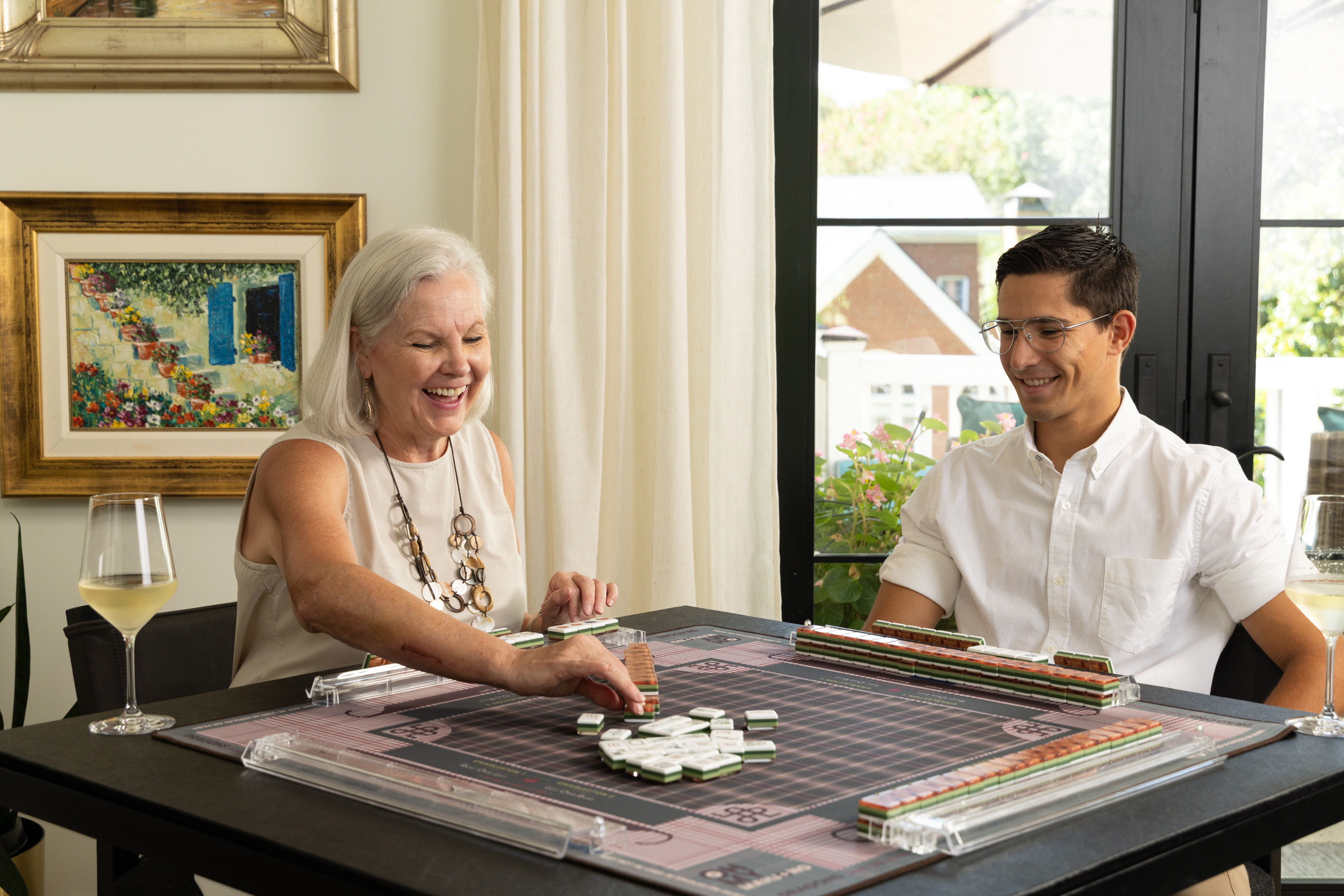
What makes Mahjong special isn’t just its gameplay — it’s the way it creates space for connection. Regular Mahjong games often become weekly rituals, gathering friends, neighbors, or relatives around a table where stories are shared, laughter is common, and relationships are deepened.
In many retirement communities, senior centers, and cultural clubs, Mahjong acts as a social lifeline. It encourages cognitive stimulation and keeps older adults mentally agile, while also offering an inclusive space to meet and socialize. Meanwhile, younger generations are rediscovering the game, learning from grandparents or joining modern Mahjong meetups that blend tradition with new friendship.
My mother has been playing Mahjong for 20 years and she’s now 89 and still enjoying the game a couple of times a week. Most of us have taught our sons and daughters and it becomes a great bridge builder at holidays or when we can grab them for those rare times they are at home. When we are visiting my mother who lives out of town, we have 3 generations playing Mahjong. Many of my friends have purchased travel sets and I’ve seen them playing all summer, at the beach, on the boat and all over the world.
The Mahjong Table as a Circle of Support
For many women, in particular, Mahjong groups are a source of support and empowerment. The rhythm of the game — fast but not frantic — allows for conversations about family, careers, health, and life. It becomes a safe space to vent, encourage, and celebrate. In fact, many groups refer to themselves as Mahjong “sisterhoods,” emphasizing the deep bonds formed over time.
During times of challenge or isolation — such as the COVID-19 pandemic — virtual Mahjong platforms kept these connections alive. Even online, the sense of routine, familiarity, and shared experience helped players feel grounded. Now that we don’t have that isolation people are flocking to outlets for shared experiences and close friendships.
Expanding the Circle
Today, Mahjong is growing beyond traditional circles. Younger players are organizing themed Mahjong nights, teaching the game on TikTok and Instagram, and designing custom tile sets that reflect their personal identities — whether that’s through color palettes, symbolism, or pop culture references.
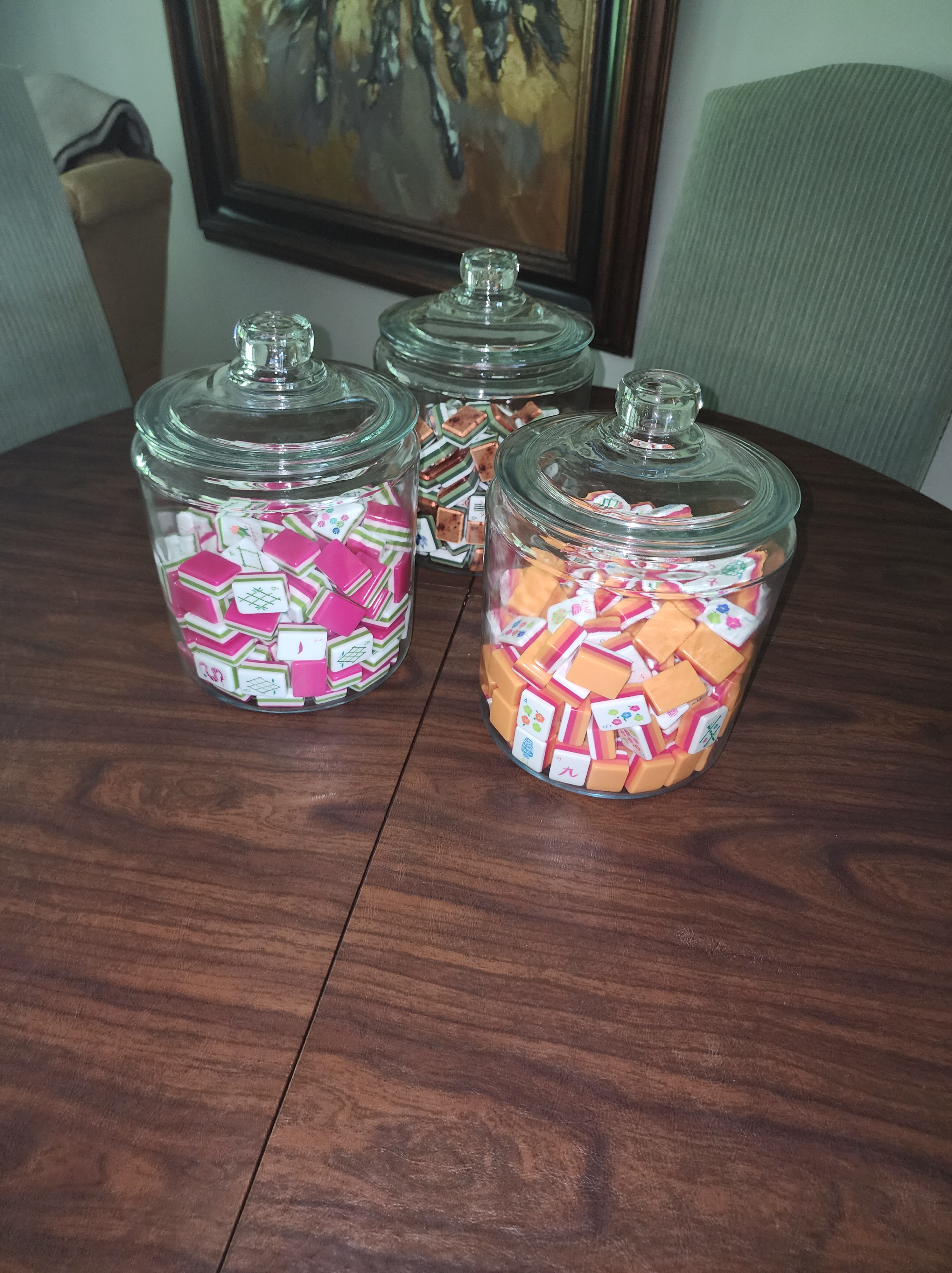
I will say I’ve become quite obsessed with prepping my Mahj Den for our games and decorating it in different colors and tiles for fun. At our evening group we have snacks and everyone puts on quite a spread to make it even more of an event. I’ve seen blogs called “cracks and snacks” with ideas for what to prepare for these snacks.
On the design and tile front, we have all become addicted to the “Oh My Mahjong” line and the various beautiful mats and colors they have. A local store @WaitingonMarthaHome https://www.waitingonmarthahome.com/ has a display where you can look at the tiles and how they coordinate with the various mats and I know its become quite a good seller for them as well. Even the lower priced tiles at Hobby Lobby are sold out most of the time. Its become quite a cultural and marketing phenomena.
Meanwhile, community organizations are using Mahjong as a bridge-builder — hosting intergenerational events, cultural exchange nights, and charity tournaments that draw diverse crowds to the table. I’ve seen this with charity functions this summer and I’m sure that will be growing this year as well.
Conclusion
Mahjong is much more than a game — it’s a cultural legacy and a community builder. Each clack of the tile is an invitation: to engage, to share, and to belong. Whether you’re playing in a quiet living room, a bustling clubhouse, or a digital space, Mahjong reminds us that connection is the real prize.
So, pull up a chair. The table is always open.
If you’d like to be connected with a group, please reach out and I can try to help you locate one in your community. Or if you need advice on how to get started playing Mahjong, I can tell you how we did it!
TINA HUNSICKER
Associate Broker

CELL (404) 931-3944
OFFICE 404.383.HOME (4663)
EMAIL Tina@HOMEgeorgia.com
INSTA @realviningsbuckhead
1819 Peachtree Road, Suite 100 | Atlanta, GA 30309
HOMEgeorgia.com

Neighborhood Info

Click here for an interactive map-based search of some of metro Atlanta's neighborhoods.
See my Zillow


 Real Vinings | Buckhead